Goooooooood morning, everyone! I hope you all are having a great and productive day, wherever you are in the world.
On September 19 & 20, 2026, I was a part of a dynamic and vibrant virtual conference where we celebrated Black autistic joy and acceptance while addressing the futures and barriers we face as a Black autistic/neurodivergent community worldwide. Shout out to Ayanna Sanaa Davis for bringing us together and making this virtual conference a reality! I pray that it will be an annual affair with hybrid options, and that September will ever be known as Black Autism Acceptance Month in the United States, and beyond!
It was also a pleasure to chop it up with Will, Shawn, Guy, Coach Lee, Gyasi, Sheldon, Charlotte, Kayla, Jaheelia, Rorie, and Sarah in our respective panels. As I mentioned in the panels, I would love to collaborate with them more, whether it’s on a project, podcast, or a chit-chat at a bar or coffee shop (whichever one they prefer).
If you missed the conference, that is okay. They saved and posted the sessions on the Black Autism Acceptance Day YouTube page; you can go back and check out the keynotes, panels, and live readings. I’ve also posted my keynote and panel videos below.
Promotional flyer for the Black Autism Acceptance Day Virtual Summit 2026. Gold infinity symbol above event title, with a circular headshot of a speaker wearing glasses. Text identifies the speaker as keynote speaker and panelist Timotheus Gordon Jr. Event dates are September 19 to 20, from 12:00 PM to 4:00 PM.
BLACK AUTISM ACCEPTANCE DAY SUMMIT 2026
This September, we’re making space for Black autistic voices, stories, brilliance, advocacy, and joy. Join us for the inaugural Black Autism Acceptance Day Summit, a free two-day virtual gathering created to center the lived experiences and perspectives of Black autistic people.
Across two days, we’ll have powerful keynotes and conversations exploring identity, autism acceptance, racism and systemic barriers, disability justice, education, fatherhood, creativity, self-advocacy, representation, community, and the future of Black autistic voices.
I’m excited to be participating as both a keynote speaker and panelist on September 20th! I’ll be providing my insights on Black men’s experiences with autism, including fatherhood, vulnerability and mental health, community building, and advocacy and leadership tools & opportunities.
September 19–20, 2026
12 PM–4 PM ET each day
Virtual & FREE to attend This is more than an event. It is a space for connection, visibility, truth, celebration, and change.
I’m honored to be joining an incredible group of Black autistic advocates, creators, educators, researchers, parents, artists, and community leaders for this important event.
Registration information will be available soon. The organizers are thoughtfully working out the best way to keep the space safe while allowing those who have expressed interest in attending to enjoy and participate in the summit.
Stay tuned for registration details, and I hope you’ll join us!
Hey everyone!! I hope you are having a great day and, if you’re in the Chicagoland area, enjoying the abundance of sunshine.
I’m gifting you all this marvelous resource on the neurodivergent journey of navigating the Illinois & Chicagoland health care system, but even if you live outside Illinois or the United States, you can apply some of these principles to your state or country. I presented on this topic on August 15 to a local group of neurodivergent adults who wanted to learn more about how to figure out neurodivergent-affirming health care and tools to advocate for their health care. This presentation was based on my experiences navigating health care in the Chicagoland area and across Illinois.
By all means, share these resources with your networks, family, friends, etc.
Image description: An anime-style digital illustration depicts a young Black man with short, tightly curled hair, rectangular black-framed glasses, and a faint mustache seated alone at a wooden desk on a rainy night. His posture is slumped, with one hand supporting his head while the other carefully writes a heartfelt letter using a feather quill pen dipped into a bottle of black ink. Tears stream down his face, conveying profound sadness, emotional exhaustion, and introspection. The room is illuminated by the warm glow of a candle and a desk lamp, contrasting with the cool blue rain visible through a nearby window overlooking a distant city skyline. Crumpled sheets of paper scattered across the desk suggest repeated attempts to express difficult emotions. Handwritten notes pinned to the wall offer messages of resilience and self-compassion, including:
“Dear Past Me, I hope you understand one day. – T.J.” “Keep going. Even when it hurts.” accompanied by a rainbow infinity symbol. “It’s okay to not be okay.” with another rainbow infinity symbol.
A dark-colored mug on the desk reads, “Sometimes it’s just too heavy,” while a closed journal beside it is titled Thoughts I Don’t Say Out Loud. The overall composition combines dramatic lighting, expressive facial features, and a contemplative atmosphere to portray depression as an emotionally overwhelming yet deeply human experience.
Source: AI-generated digital artwork created with OpenAI’s ChatGPT image generation (DALL·E) based on a user-provided reference photograph and a prompt requesting an anime-style portrayal of the user in a depressed emotional state while writing a letter with a quill pen. The image is an artistic interpretation and is not a photograph or a depiction of an actual event.
Content Warning: Mentions of death, mental health struggles, marginalization, and suicide
Writing also appears in “The Black Autist” Substack.
Greetings, everyone,
I’m taking a page out of Tupac’s The Rose that Grew From Concrete and writing out my plans and pleas for when my time on Earth is up, regardless of how it ends, regardless if it ends on the Creator’s watch, by my own hands, or (worst case) through someone else’s evil intent.
In his poem “In the Event of My Demise,” Tupac expresses his sense that he will one day die. The plea for what he wanted to be remembered for is brief, but nonetheless heart-piercing. He wishes that he had loved all this positive influence before he dies, and that he would “die 4 a principle or belief” he lived for.
I chose this poem not because it’s a lyrical omen to what would eventually happen to Tupac, nor because Tupac is one of my favorite lyricists and rappers of all time.
I chose this poem as an inspiration to my own “In the Event of My Demise”. I have something to say in case something happens to me.
Take this however you want. A death note, a call for attention, a will to my readers… whatever you want to take it to mean. I am not here to state or argue the intentions. And no worries, I will do my best not to take this into my own hands.
However, let’s take things into perspective. Let’s imagine the lifespan of a Black Autist like yours truly.
Depending on which article or essay you read, the average lifespan of an autistic person is between 36 and 40 years, less than the global average age of neurotypicals (assuming that they don’t have signs of neurodivergence), which is 73 years of age. I will be turning 39 in October, so if the Creator is willing, I would already be considered a very old man in the autistic community. I won’t be surprised if the average life span of a Black autistic person, regardless of gender, is much lower than the mainstream average of an autistic person. If I compare and contrast my current biological age to the predicted life span of a Black autistic person, then consider me blessed that I made it that far…I guess.
At any rate, you may ask: “What would an autistic person die from?”
Co-morbid health problems (such as sleep apnea, heart conditions, malnutrition), drowning, police violence, hate crimes (I would include sex crimes targeting autistic and neurodivergent folks as a hate crime), and suicide.
You see, autism is not only disability or “ailment” that I deal with. I have arthritis, sleep apnea that is affecting my right ventricle while triggering my ADHD even more, C-PTSD, anxiety, and depression. Some things are triggered by my decrease in exercise after playing sports most of my life, by the time I was 31-32. Another explanation is carrying what Mary Doherty calls “autistic shame”.
Autistic shame is an accumulation of shame that an autistic person carries for feeling out of place, or a failure because they struggle to fit into a world that is built for neurotypical people only. Autistic shame is feeling punished for existing and living an autistic life. Punished for seeing and moving in the world as a neurodivergent being, though you are flesh and bones just like any other human. Punished for not achieving success like a neurotypical.
I’m more familiar with the American Dream, so I will use it as an example. The American Dream for a neurodivergent person is to earn enough money to live comfortably, start a family, be treated with respect regardless of background, live freely, and succeed in their field. According to that plan, I am a failure because I live paycheck to paycheck despite having a salaried full-time job, I am not married yet like some of my peers (though I just got recently engaged in April), I don’t have a car, I struggle to pay rent (plus constantly in disputes with apartment management) to the point of facing eviction for the second time in 3 years, and I’m in a constant struggle to be a strong presence and influence in my son’s life to the best of my ability and with teamwork. And while I’m doing the best I can to support my goddaughter, even that effort causes some in her circle to feel envious of me simply because I am doing my duty as a godfather. And yes, I am grateful to have been with my lovely fiancée for 5 years; she has been, by far, the best and most supportive partner I have ever had. Sadly, prior to 2021, it took me years of making dating mistakes and experiencing abuse and manipulation before I got to this point.
I feel miserable based on that “series of failures” alone, when I see my neurotypical peers living out their dreams and accomplishments, despite having the talents and drive to shine myself. I also constantly feel awful because I would also be the weirdo, the black sheep, to even the closest circles, simply due to living in a neurotypical world that, despite best efforts, I struggle to understand. Plus, I feel that I am letting the people who support me down because I am not living up to society’s expectations of what I am supposed to have accomplished by now. And…I don’t feel appreciated enough for the work I do; it’s mostly treated as either a punchline or something not important or valued in the neurotypical world, even when I overachieve (which I have to do just to fit in).
I am also ashamed that, among every group I am part of, I don’t fit in because I am not enough of a part of it. I am not “Black enough” to fit in fully with the Black community, I’m sure mainstream American society (aka white American society) hates me and wants me dead because I’m Black and autistic, I don’t seem “disabled enough” to people with more visible disabilities, and I’m not “autistic enough” for the autistic community because my interests are different than those who are into Sheldon Cooper’s type of interests.
It is hard to confide in people in my closest circles about these feelings of pain, isolation, and shame. I fear that they would not fully understand how they can help me defeat these demons that are coming after me. Or maybe, I fear that I would get laughed off and brushed aside with: “It’s just a misunderstanding”, “It’s all in your head”, “Believe in God”, “You’re better off than others”, “You’re thinking negatively”, “You’re in the wrong because you’re doing it wrong”, “Get over it”. My achievements in disability studies and advocacy don’t matter, and my efforts to live free as just me don’t matter because in their eyes, I don’t belong, and I have failed in the (White, patriarchal) neurotypical world.
No wonder why the suicide rate among autistic people is high as hell. All the expectations of living “right” in the neurotypical world that is not meant for me, even though I am technically a human being like you. Racism and ableism magnify those painful attempts to blend in.
I am doing my best to let the Creator decide when I die, instead of taking things into my own hands by plunging deep into Lake Michigan, filling my tummy with poison, or drifting in the middle of the lake to survive and slowly die a quiet, forgotten man. Those thoughts have been creeping into my head more and more as I approach middle age.
But I promise you, my readers, I am doing my best to let the Creator decide my fate, not me, through “honorary suicide,” where I end my life for the sake of the neurotypical world. Better to make the world better by sacrificing myself, yes? That’s what society wants for neurodivergent people, especially multiply marginalized people.
Nevertheless, in the event of my demise:
I want to be remembered as a multi-talented self-advocate who gave all of his heart, dedication, and talents to create a freer, more just, and equitable world for marginalized neurodivergents. I had many successes and many roadblocks, and I am sure both will be documented in the annals of history. I don’t mind it. But as they say in Special Olympics, I was trying to be brave in the attempt to create such a world. A world where neurodivergent people can make decisions, have pleasure, seek fulfilling careers and endeavors, start families, and be the full version of themselves. A world where neurodivergent pride is intersectional, inclusive, and accessible. I want to be remembered for trying to create that life for myself and people around me, whether I achieved some parts of that dream or not. Have people to learn from my mistakes and triumphs in living the Black autistic life, or the autistic/neurodivergent life in general.
To my readers, continue to promote and build on my work when I depart. Build upon the world I strived to create while I was on Earth, and create a new generation of dreamers who can make my world happen and make this current world a better place for ALL neurodivergent people. Live a free life for yourself also. Be not afraid to stim, to be proud of your identities, and to pursue your goals.
To my closest circle (that includes my fiancée and my large family (extended or blood)), take care of my son and goddaughter. Help my shining stars find their own path to success, let them be their own being in that pursuit, while providing them with essential tools for success and kindness in this sullen world. They should not be my clones but rather extensions of me with their own personalities and aspirations. Treat them like the child in Khalil Gibran’s poems.
If you made it this far, thank you for reading this real, painful, but honest post. Thank you for not judging me or being quick to send me to an institution, but rather, for understanding what I am going through. Again, I am fighting the urge to end my life; instead, I want to live on, grow from the pain, and rise like a phoenix, then let the Creator decide when they are done with me. Do not be quick to call for reinforcements; I have people in place already who can steer me away from that urge, should I attempt it or if my mental health spirals out of control.
No worries. My intent is not to make this my last ever post for the Black Autist, but rather to offer a cautionary tale about what happens when we systematically and socially harm marginalized neurodivergent people, as well as give examples of why we must continue to fight for the freedom, respect, honor, dignity, and prosperity of marginalized neurodivergent people.
If you’re wondering how you can support me, pray for me. Check on me from time to time. If you can help me through some of the problems, or send me resources or connections to people and organizations who can help me navigate my struggles, I would welcome it…but only AFTER you ask me what is going on and if you are sincere in supporting me and my journey from my hell that I’m going through in my life now. Otherwise, just pray for me and check on me. Heck, funny memes, gift cards, and cartoons will fill my spirit.
Image Description: A vibrant, semi-realistic digital caricature depicts Timotheus “T.J.” Gordon, Jr. warmly welcoming singer-songwriter SZA into the Black autistic community. T.J. is shown smiling broadly with exaggerated yet recognizable facial features based on the provided reference photo, including his short curly hair, black rectangular glasses, and cheerful expression. He wears a black hoodie reading “Black Autistic & Proud” with a rainbow infinity symbol prominently displayed on the front.
Standing beside him is a stylized caricature of SZA, smiling warmly in a floral-inspired gown that resembles the provided reference image. Together, they hold a large welcome sign that reads: “Welcome SZA to the Black Autistic Community!” The word “SZA” appears in rainbow colors, and small rainbow infinity symbols decorate either side of her name. The background features multiple Pan-African flags waving behind them alongside large rainbow infinity symbols floating overhead, symbolizing Black pride and neurodiversity. A glowing golden skyline creates a celebratory atmosphere, while the absence of puzzle pieces emphasizes identity-affirming autistic symbolism. The overall mood is joyful, welcoming, empowering, and community-centered.
Source: AI-generated by ChatGPT (OpenAI) from user-provided reference images and prompt
I, Timotheus Gordon, Jr., as a representative of the Black Neurotribe (or, as I call it, a global league of Black Autists and Neurodivergents), welcome SZA to our group! I’m proud of her for revealing her identity to her fanbase. I hope that, with that and her music, SZA can build a wide autistic and neurodivergent fanbase while exploring ways to support her newfound community.
For those who don’t know, SZA posted her autistic identity and diagnosis yesterday on one of her IG accounts. This is huge for Black neurodivergents and autists like myself; we don’t have many celebrities we can relate to who are out as neurodivergent. Her announcement becomes more significant because she’s a star among stars in the R&B world, and we have plenty of Black neurodivergent folks in the music world, like 50 Tyson, Questlove, Sean McRae, VVN, Chrisette Michele, Kaishawna, TR Sun, Morgan Janay, Solange Knowles, and Kelly Rowland. The more Black neurodivergent people that represents our interests and prospective careers, the more encouragement we can receive in pursuing our dreams and living our lives out loud (with and without supports).
As a Black autistic artist and self-advocate myself, I have two takes on SZA’s announcement.
SZA stated in the comments of her initial Instagram post: “Finally took the time n got formally diagnosed .. Asperger’s / high functioning autism / smarter than u n****s so stop playing in my face cause pattern recognition told me and I WILL get to the bottom if it thanks. — Pretty sure this is why I’m taking Ai so personally, btw lol. And also why I’m in every comment section.”
I can understand why the mention of Asperger’s syndrome and high-functioning autism will piss off some in the mainstream autistic community. Due to the updates in the DSM diagnostic protocols, we view autism as a spectrum of experiences instead of categories/types of autism, for the autistic experience is more complex and nuanced depending on each autistic person. There are instances of successful autistic people, like myself, who may speak verbally but need lots of support to function in a neurotypical world, while there are many successful autistic people who use typing, spelling boards, and other forms of communication devices to speak up and speak out. We can discuss the experiences of people who may show autistic traits or need support, depending on the situation (e.g., sensory overload, needing to type rather than speak in great detail, needing more time to process information or get thoughts together, etc.). Hence, we all say “we are autistic”, “we have autism,” or “we are on the autism spectrum”, regardless of how any of us may express our autistic identity at any given time or place. Don’t forget that how people live their autistic lives may also vary by gender, ethnicity, religion, interests, and more.
Also, Asperger’s syndrome and high-function autism were terms formally used to separate those who can speak verbally and blend into neurotypical society from those who cannot speak verbally and/or blend into neurotypical society. That’s discriminatory! No one is better than another just because they can speak like a neurotypical. Speaking of Asperger’s syndrome…there’s some Nazi history behind that term….and Asperger himself was a Nazi, so we don’t talk about that Bruno!
However, I often see the mainstream autistic community police and punish each other every time they say a controversial term to describe autism, instead of encouraging new members of the community to learn autistic culture and connect with people with similar interests and paths. I was once like SZA, so excited to vocalize my autistic pride that I unknowingly used terms that divide the community. I used to identify as a “highly functioning autistic person” before I realized why that term is problematic. I, too, like SZA (possibly, I imagine), got lectures on how to describe autistic people, especially the preferred use of identity-first descriptors (e.g., “autistic”).
That’s where I stop. Yes, I learned to use identity-first descriptors. But I have also learned to allow people to have grace and self-determination on how they want to describe their autistic being, so long as how they describe it is not derogatory.
Rather, I think we should welcome newcomers to the global autistic community, including BIPOC autistic communities, by supporting their dreams, connecting them with key people and resources that can help them succeed, and showing them around networks where they can find their tribes. Add those with teaching newly self-diagnosed or diagnosed autistic people how to address themselves and fellow autistic and neurodivergent folks. Part of the reason I created the Black Autist was to share information and stories about the many ways to celebrate and represent autistic culture & pride, intersectionally. My platform combines neurodivergent/disability/autistic culture with intersectional identities, so people can connect through a circular, intersectional approach to experiencing neurodivergence and autism.
In conclusion, if we want to welcome SZA into mainstream and ethnic autistic/neurodivergent spaces, let’s focus more on connecting her with fellow Black neurodivergent & autistic people and organizations that support (and preferably are run by) Black neurodivergent & autistic people. Share your interests with SZA, for she may share those interests with you. Encourage SZA to embrace her womanhood, Blackness, and neurdivergence simultaneously, for all of her identities together make her SZA. Let’s help SZA find her tribes and get accustomed to them. That’s how we should help SZA.
I am currently featured in #AutisticOutLoud, a community-led documentary exploring Black and autistic identity in 21st-century America. The producers are working to bridge the gap in representation and highlight the intersections of race and neurodivergence in healthcare, education, and the arts.
To bring this vision to life, we are hosting a fundraiser next week, and I would value your presence.
Event: #AutisticOutLoud Fundraiser: A Benefit to Amplify Black Autistic Voices
Date: Thursday, May 21st
Time: 6:00 PM EST (90 Minutes)
Theme: Amplifying Black Autistic Voices
We will be sharing clips and stories from featured participants, including late-diagnosed entrepreneurs and artist-activists.
How to support:
– Attend: Join us to hear directly from the creators, advocates, and participants.
– Contribute: If you cannot attend, you can support our production goals at the link below.
#SocialMediaTip#GenerativeAI Tip: Type in exactly what you want and don’t want in a prompt for generating a graphic for socialmediacontent. Otherwise, AI would think that someone like @michaelphelps.official (Michael Phelps) is Black and Neurodivergent.
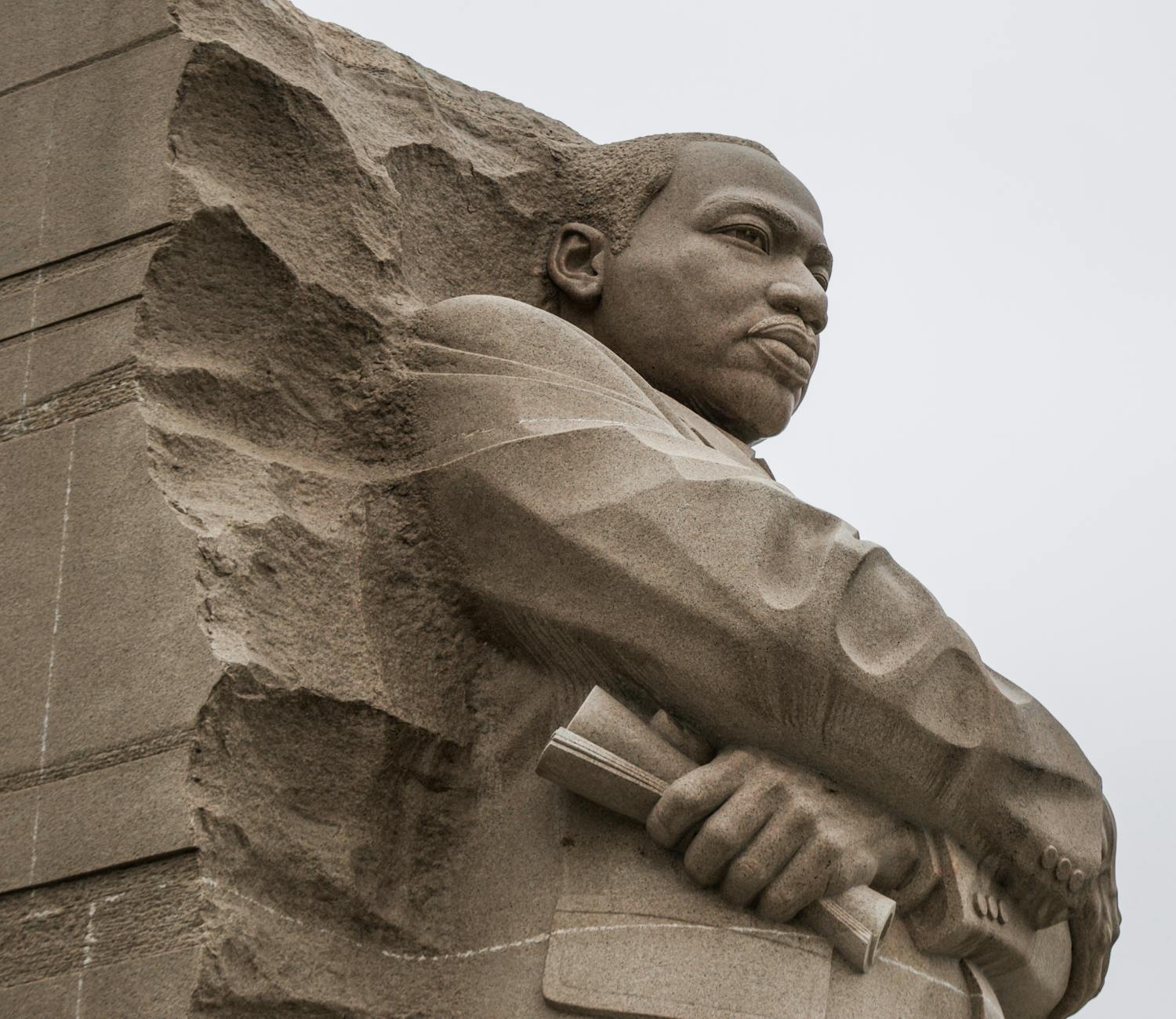
Note: This letter will also be posted on my Substack. I wrote this for an MLK writing contest my school held, which got me 2nd place and an undisclosed prize.
January 22, 2026
The Reverend Martin Luther King, Jr., PhD Ebenezer Baptist Church
101 Jackson St NE
Atlanta, GA 30312
Greetings, Reverend Dr. King,
I am writing to you as a representative of the modern American dreamers.
As a Black autistic man in America, I am afraid, along with you. I am witnessing the decay of the American dream right in my neighborhood, in which the federal government is endorsing the bullying of marginalized people through military-like raids, supporting slurs as ‘free speech’, and re-legalizing discriminatory practices in public places such as schools and government agencies. It is as if I am watching the Jim Crow you helped defeat in the South resurrect on steroids by the administration we shall not name. Then again, what is new in America? Non-pluralistic American ideals and discrimination have always been as thematic as the ideals of the Declaration of Independence. Even our great president, Teddy Roosevelt, promoted the ‘whole American’ ideal where the good American is (white and) not tied to their homelands before migrating (or getting kidnapped) to the United States. How did they enforce “the All-American” ideology in the early 20th century? Systemic marginalization and brutality towards peoples who are “not American enough”, usually non-white, disabled, and non-straight. What’s been happening this year alone is a replay of the first score of the 20th century.
But not to worry.
We are applying your teachings and Malcom’s teachings and the teachings of all the freedom fighters of the 1950s and 1960s. For instance, you should be proud of Chicago; our mayor and our governor are creating legislation that are minimizing militarized attacks of undocumented Americans and American citizens of color. There are some in Congress doing their best to oppose harmful laws from the regime. And everywhere you go, you may see large crowds protesting and boycotting. Our fighting spirit is still burning bright.
You had a dream that one day, the descendants of slaves and the descendants of slave owners would sit around a table of brotherhood, eating and fellowshipping together. I, too, share your dream, though I picture your gathering more like a large potluck where people from various cultures bring their dishes to share with all, while each people at the table of humanity are supported so that they can equitably participate (for example, the tables are level and placed on smooth surfaces so that mobility device users can enjoy and join in).
Like that potluck, there is no America without the intersectional input and influences from each person with many different backgrounds (e.g., race, disability identity, gender, class, etc.). We all have different things to offer to ensure America remains unified and equitable, just as our imperfect yet insightful Founding Fathers envisioned.
However, I need your help, and perhaps you can assist me in conveying what we want to the readers and audience. Did you struggle with including disabled people, white allies, LGBT+ communities, and marginalized people from other communities of color (e.g., Latinx, Asian-American, Native American), or how did your contemporaries make sure every identity had the opportunity to contribute to structuring the American dream that you have spoken of in 1963? It’s a dilemma that even I, as a self-advocate from multiple backgrounds, struggle with. People assume that we must focus on the plight of one community at a time, but I feel oppression unites all of us because we face similar types of oppressions, but in different contexts. I wish our movement were as big as your Civil Rights Movement, and as serious as your movement, where we are okay with making the status quo folks uncomfortable and making ourselves uncomfortable for the greater, unified, and equitable good.
I think I might have untied the Gordian knot! The Civil Rights Movement was large because you, Malcolm, Rev. Jackson, the Black Panthers, the Rainbow Coalition, and more of your contemporaries figured out one thing: oppression affects us all; therefore, we must fight oppression together. You have all already provided us with the blueprints. Just look at how you united Black and European-American communities together, or how Fred Hampton united all races together, or (later on) how the Black Panthers played a crucial role in the disability rights movement.
My request to you and your fellow ancestors and “OGs” of the Civil Rights movement is this: teach us and show us examples of how we can bring generations, races, genders, and health conditions together to prevail against systemic oppression and build the table of humanity you spoke about long ago. We’re also open to guiding us to people in our current generations who are dreamers and fighters for building that table for our potluck.
Thank you for your time and consideration. Let us not be strangers; let’s share our knowledge, invite more people to our table, and fight for the table to not only reappear publicly but also stay for a long time. If we can work together across generations, I know we can work together across dimensions (you in Heaven’s Hall of Fame and me, along with your disciples, on Earth).